.svg)
.svg)
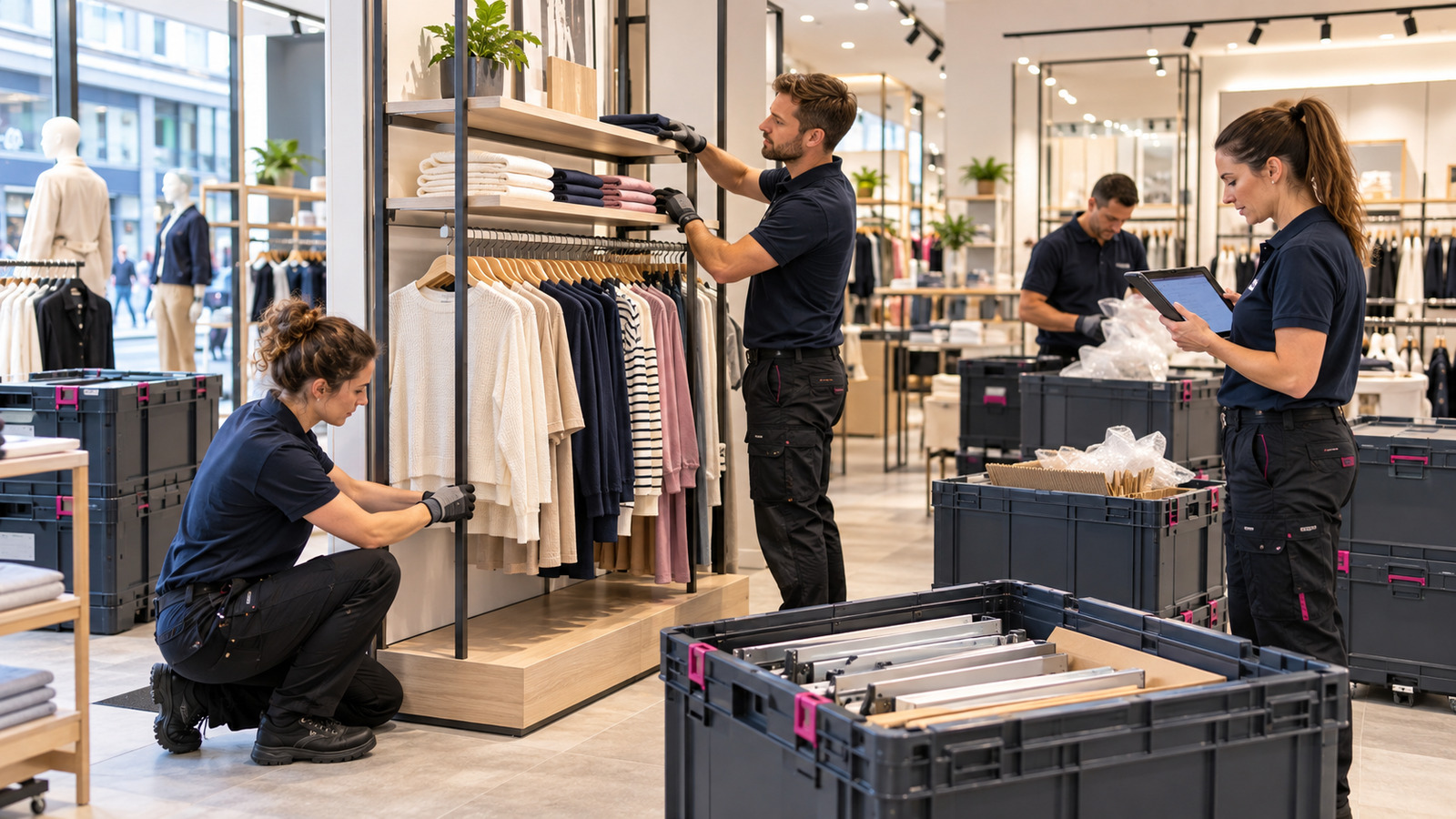
Making Retail Rollouts More Responsible Without Losing Pace
Sustainability and speed are sometimes presented as competing priorities in retail rollout planning. They do not have to be. Many of the choices that reduce waste also create a better controlled and more efficient programme.
Start with accurate information
Avoided visits are often the most immediate sustainability gain. Validating stores, access, assets and installation requirements before scheduling reduces wasted mileage and repeat activity.
Accurate data also improves route densityand allows the right skills and materials to arrive together.
Design the full asset lifecycle
POS and fixtures should be planned beyond installation. Can components be repaired, reused or separated for recovery? Who owns removal? How will assets return from store?
Sustainable retail execution becomes practical when these questions are included in the operating model and budget, rather than added at the end.
Use evidence to improve future rollouts
Capture reasons for repeat visits, damaged materials and unused assets. This information can influence packaging, design, quantities and training.
Sustainability reporting is stronger whenit is connected to operational measures such as miles avoided, assets recovered and first-time completion.
Responsible delivery at European scale
As a certified B Corp, SIG considers responsible business practice alongside commercial performance. Connected local teams can reduce unnecessary cross-border movement while shared reporting creates oversight.
The goal is not to slow the programme. It is to remove avoidable work, protect resources and deliver the required retail outcome more intelligently.
What brands and retailers should do next
Priority 1: Model visits and routes before committing resource.
Priority 2: Specify reuse, repair and recovery requirements in the asset brief.
Priority 3: Track repeat visits, unused materials and recovered assets.
Priority 4: Use field evidence to improve packaging and component design.
What this means for brands
The central lesson is that sustainable retail execution should connect a clear standard with the people, information and ownership needed to deliver it. Brands should define the outcome, involve local experts early and measure the change created rather than relying on activity alone.
For multi-market programmes, consistency and localisation are complementary. Shared governance makes performance visible; local knowledge makes the plan workable. Bringing both together is what turns coverage into reliable retail execution.
How Service Innovation Group can help
Service Innovation Group helps brands improve retail execution through field sales, merchandising, audits, POS installation, maintenance, data collection and real-time reporting. Our UK team works with connected local teams across Europe to provide one joined-up approach with market-level expertise.
If you are planning a UK or European programme, speak to SIG about the operating model, resource and reporting needed to deliver measurable results.
Explore our POS installation services - HERE
Discuss your campaign - HERE
Frequently asked questions
Why does this issue matter to brands and retailers?
It affects how sustainable retail execution translates into customer experience, operational control and measurable commercial performance.
What does Service Innovation Group provide?
SIG supports field marketing, field sales, merchandising, audits, data collection, POS installation and maintenance across the UK and Europe.
Can SIG support multi-country programmes?
Yes. SIG combines local market delivery with connected programme management and consistent reporting across European markets.
How is field activity measured?
Measures are agreed around the objective and can include productive coverage, compliance improvement, photo evidence, issue resolution, conversion and other commercial outcomes through our SIG owned platform - Celero One