.svg)
.svg)
Retail Installation Is Where Strategy Becomes Visible
A retail installation is often described as the final stage of a rollout. In reality, it is the point at which months of design, production and planning become visible to the shopper. If that moment is poorly managed, the investment made upstream cannot deliver its full value.
Installation is part of the customer experience
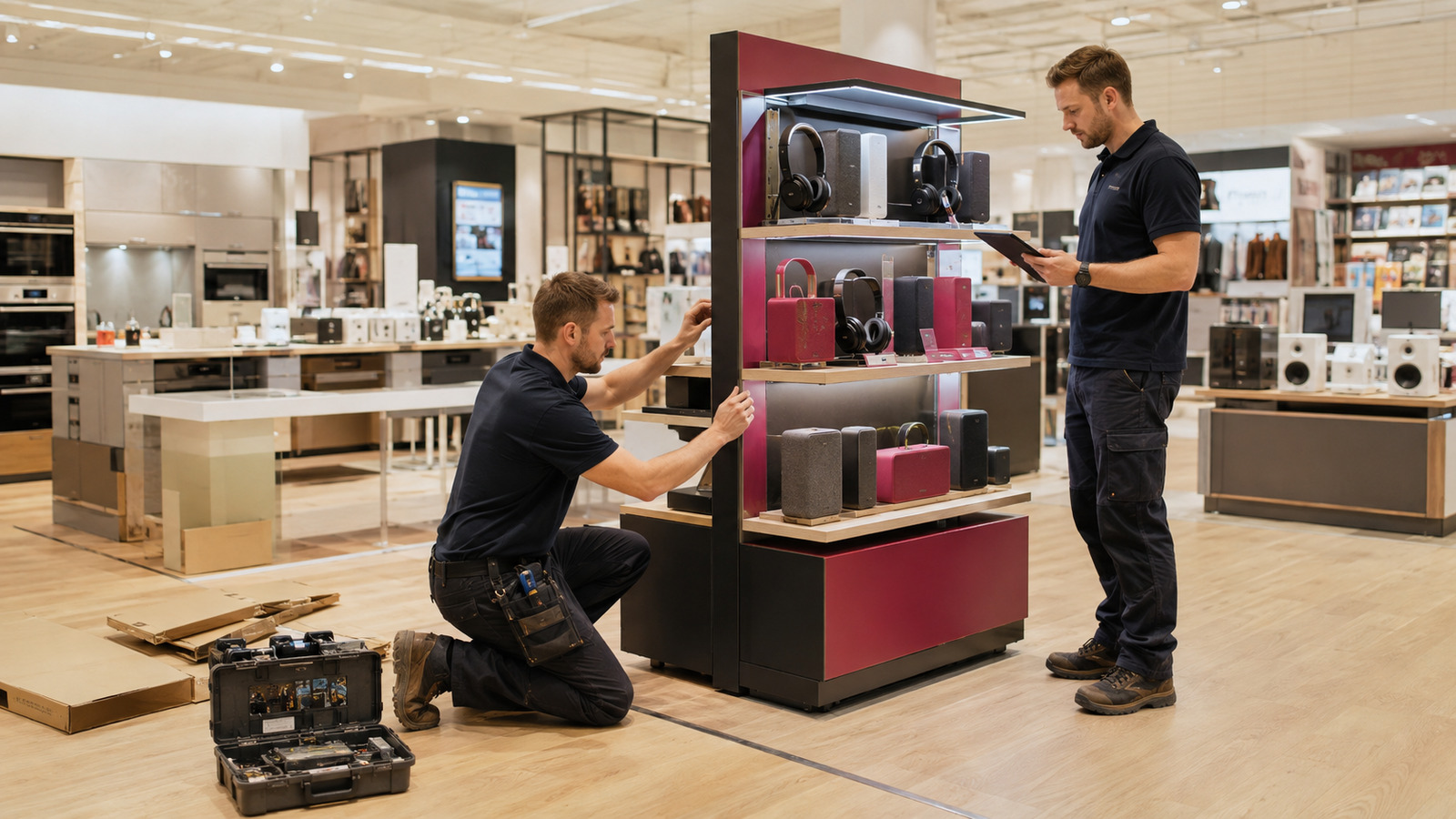
A fixture has to do more than fit the allocated space. It must be safe, stable, correctly positioned, fully dressed and easy for store colleagues to maintain. Live products, security devices, power and digital content may also need to work together.
This is why retail POS installation services require more than a delivery schedule. They require site knowledge,trained installers and a clear acceptance standard.
Plan for the real store, not the ideal drawing
Floor plans and survey data are useful, but stores change. Space may have been reallocated, access may be restricted, power may be unavailable or an existing fixture may need removal.
Pre-installation validation reduces surprises. Where exceptions remain, installers need approved options and a fast route to escalation so the programme keeps moving without compromising the brand standard.
Protect the value after launch
Displays are touched by customers, moved during range changes and affected by daily retail activity. A successful rollout therefore includes aftercare, maintenance and a process for replacing damaged or missing components.
Tracking assets and recurring faults also helps brands improve future designs. Installation data should become product and operational insight, not disappear after sign-off.
A connected European installation model
Service Innovation Group supports installation, merchandising and maintenance through UK and European teams. Common governance and reporting create visibility across markets, while local delivery teams adapt scheduling and store engagement to each environment.
That combination allows brands to manage multi-market rollouts through a joined-up approach and still receive reliable evidence from every completed location.
What brands and retailers should do next
Priority 1: Survey high-risk or non-standard stores before production.
Priority 2: Test the complete installation, including product, power, security and content.
Priority 3: Agree safe alternatives and escalation routes for unsuitable sites.
Priority 4: Plan for maintenance, spares and removal before launch.
What this means for brands
The central lesson is that retail POS installation services should connect a clear standard with the people, information and ownership needed to deliver it. Brands should define the outcome, involve local experts early and measure the change created rather than relying on activity alone.
For multi-market programmes, consistency and localisation are complementary. Shared governance makes performance visible; local knowledge makes the plan workable. Bringing both together is what turns coverage into reliable retail execution.
How Service Innovation Group can help
Service Innovation Group helps brands improve retail execution through field sales, merchandising, audits, POS installation, maintenance, data collection and real-time reporting. Our UK team works with connected local teams across Europe to provide one joined-up approach with market-level expertise.
If you are planning a UK or European programme, speak to SIG about the operating model, resource and reporting needed to deliver measurable results.
Ready to discuss how SIG can deploy your retail installation programme across Europe?
Contact us here
Frequently asked questions
Why does this issue matter to brands and retailers?
It affects how retail POS installation services translates into customer experience, operational control and measurable commercial performance.
What does Service Innovation Group provide?
Service Innovation Group supports field marketing, field sales, merchandising, audits, data collection, POS installation and maintenance across the UK and Europe.
Can Service Innovation Group support multi-country programmes?
Yes. SIG combines local market delivery with connected programme management and consistent reporting across 20 European markets.
How is field activity measured?
Measures are agreed around the objective and can include productive coverage, compliance improvement, photo evidence,issue resolution, conversion and other commercial outcomes.